



熱間ロールミルプロセス
/Introduction to Advanced Quenching Technologies In the demanding world of metallurgy and material science, precise heat treatment is paramount to achieving desired material properties. Among various heat treatment methods, quenching stands out as a critical process for enhancing hardness and strength in metals. This article delves into the intricacies of the water quenching process , a foundational technique for rapid cooling that underpins the production of high-performance components across numerous industries. Understanding its mechanics, advantages, and modern applications is crucial for engineers and decision-makers seeking to optimize their manufacturing workflows and material performance. The selection of an appropriate quenching medium significantly impacts the final microstructure and mechanical properties of the treated material. While oil and polymer quenchants offer controlled cooling rates for specific alloys, water quenching remains a highly effective and economical choice for achieving high hardness, particularly in carbon and low-alloy steels. Its high thermal conductivity and latent heat of vaporization enable rapid heat extraction, making it indispensable for applications requiring maximum through-hardening. This comprehensive overview will explore the technical specifications, application scenarios, and key advantages of contemporary water quenching systems, highlighting their role in enhancing product integrity and operational efficiency. Detailed Process Flow of the Water Quenching System The water quenching process , specifically designed for applications like bar and wire, involves a meticulously controlled sequence of steps to ensure uniform cooling and optimal material transformation. This process is integral to developing specific metallurgical properties such as increased hardness, tensile strength, and wear resistance. Schematic Process Steps: Material Pre-heating/Austenitizing: The initial stage involves heating the steel bar or wire to a specific austenitizing temperature, typically between 850°C to 950°C, depending on the alloy composition. This is often performed in a continuous induction furnace or a controlled atmosphere furnace. This step transforms the material's microstructure into austenite, a high-temperature face-centered cubic phase, preparing it for the rapid cooling phase. Transfer to Quenching Device: Immediately after reaching the target austenitizing temperature, the heated material is rapidly transferred to the water quenching device . Minimizing transfer time is critical to prevent unwanted pearlite or bainite formation. Water Quenching: The material enters a specialized quenching chamber where it is immersed in or sprayed with a precisely controlled flow of water. The rapid extraction of heat from the material causes the austenite to transform into martensite, a very hard and brittle body-centered tetragonal phase. The cooling rate is carefully managed to achieve optimal hardness without excessive cracking or distortion. Modern water quenching systems often employ turbulent flow designs to ensure uniform cooling around the entire circumference of the bar or wire. Tempering (Post-Quench): Following quenching, the material is often too brittle for most applications. A subsequent tempering process, involving reheating to a lower temperature (e.g., 200°C to 600°C) and then slow cooling, is performed. This reduces brittleness and improves toughness, while retaining sufficient hardness. This crucial step fine-tunes the material's final mechanical properties. Inspection and Testing: The treated material undergoes rigorous quality control checks, including hardness testing (e.g., Rockwell, Brinell), tensile strength testing, microstructure analysis, and dimensional inspection. These tests ensure compliance with design specifications and industry standards. Typical materials processed include various carbon steels (e.g., AISI 1045, 1060) and low-alloy steels (e.g., 4140, 4340). Manufacturing processes for the water quenching device itself utilize high-precision CNC machining for critical components, casting for robust structural elements, and forging for high-stress parts to ensure durability and reliability. Testing standards adhere to international benchmarks such as ISO 9001 for quality management, ASTM A370 for mechanical testing, and ANSI standards for design specifications. These systems are engineered for a service life exceeding 15-20 years with proper maintenance, ensuring long-term operational efficiency. Target industries for this technology span a wide range, including petrochemical for pipeline components, metallurgy for rolled products and special steels, and infrastructure for high-strength rebar and structural elements. In these scenarios, the advantages of the water quenching process are evident. For instance, in rebar production, it significantly enhances tensile strength and yield strength, crucial for structural integrity, while offering superior corrosion resistance when integrated with appropriate material selection. The inherent efficiency of water as a quenching medium also contributes to energy saving compared to some specialized oil quenchants, reducing operational costs. Industry Trends and Market Landscape The global heat treatment market is continually evolving, driven by demands for higher performance materials, energy efficiency, and environmental sustainability. For the water quenching process , key trends include the development of advanced control systems for precise cooling, the integration of IoT for real-time monitoring and predictive maintenance, and the exploration of eco-friendly additives to enhance quenching performance without compromising environmental standards. There's a growing emphasis on minimizing distortion and residual stresses, which are common challenges in rapid quenching. Innovations in nozzle design for spray quenching and agitator mechanisms for immersion tanks are aimed at achieving more uniform cooling and reducing thermal gradients within the material. Furthermore, the push for lighter, stronger materials in automotive, aerospace, and construction sectors fuels the demand for sophisticated heat treatment solutions that can precisely control material microstructure. The rise of specialized alloys also necessitates adaptable quenching systems capable of handling a wider range of materials with varying critical cooling rates, pushing manufacturers to innovate beyond traditional designs. Technical Specifications of a Modern Water Quenching System Modern water quenching systems are engineered with precision to meet stringent industrial requirements. Below is a representative table outlining typical technical parameters for a high-performance water quenching device : Product Specification: Continuous Water Quenching System Parameter Specification Description Material Compatibility Carbon Steel, Low-Alloy Steel, Tool Steel Versatile for various ferrous alloys requiring rapid cooling. Material Form Factor Round Bars (Ø 6mm - 120mm), Wires (Ø 3mm - 15mm) Designed for continuous processing of elongated materials. Quenching Medium Deionized Water (Optional additives) Ensures consistent cooling, minimizes scaling. Cooling Rate Up to 200°C/sec (adjustable) Rapid heat extraction for martensitic transformation. Water Temperature Control PID Control, 20°C - 60°C ± 2°C Maintains optimal quenching efficiency and prevents boiling. Water Flow Rate 50 m³/hr - 300 m³/hr (variable) Ensures uniform cooling and prevents vapor blanket formation. System Power Consumption 30 kW - 150 kW (depending on capacity) Optimized for energy efficiency. Control System PLC-based with HMI interface, Data Logging Precise process control, traceability, and ease of operation. Safety Features Emergency Stop, Over-temperature Alarms, Flow Sensors Ensures operator safety and system integrity. These specifications underscore the precision and robustness required for industrial-scale operations, ensuring consistent quality and performance for various material grades. The modular design of many modern water quenching systems allows for integration into existing production lines, providing flexibility and scalability. Application Scenarios for Water Quenching Systems The versatility of the water quenching process makes it indispensable across a spectrum of heavy industries. Its primary objective is to enhance the mechanical properties of materials, enabling them to withstand extreme operational conditions. Metallurgy and Steel Production: Essential for producing high-strength rebar, specialty steel bars, and wire rods used in construction, automotive, and machinery manufacturing. It imparts superior hardness and yield strength, critical for structural applications and wear parts. Automotive Industry: Used in the production of crankshafts, camshafts, gears, and various chassis components where high wear resistance and fatigue strength are paramount. The precise control over the quenching process ensures component reliability and extended service life. Petrochemical and Energy Sector: Components exposed to high pressure, high temperature, and corrosive environments, such as specialized pipes, valves, and drilling equipment, benefit from the enhanced strength and durability achieved through water quenching. Tool Manufacturing: Many tools, including drills, cutting tools, and dies, rely on the extreme hardness provided by the water quenching process to achieve their cutting and forming capabilities. Water Supply & Drainage Systems: For specialized high-strength fittings and components that require robust mechanical properties and resistance to environmental degradation. Each application leverages the specific advantages of rapid cooling to produce materials that meet rigorous performance benchmarks, contributing to increased safety, efficiency, and longevity of end products. Technical Advantages and Benefits The adoption of a well-engineered water quenching process brings a multitude of technical and operational advantages to material processing: Superior Hardness and Strength: Water's high specific heat capacity and thermal conductivity allow for very rapid cooling rates, which are essential for achieving a high percentage of martensitic transformation in carbon and low-alloy steels. This results in significantly increased hardness and tensile strength, crucial for components under high stress or wear. Cost-Effectiveness and Energy Saving: Water is an abundant, inexpensive, and environmentally benign quenching medium compared to specialized oils or polymers. Its reusability and simpler handling requirements contribute to lower operational costs. Furthermore, modern water quenching systems are designed with efficient heat exchangers and circulation pumps, optimizing energy consumption. Enhanced Corrosion Resistance (Indirect): While quenching itself doesn't directly impart corrosion resistance, the resultant dense, fine-grained martensitic structure, when followed by proper tempering and surface treatments, can offer improved resistance to certain forms of corrosion by reducing pathways for corrosive agents. Process Control and Uniformity: Advanced water quenching devices incorporate sophisticated flow dynamics and temperature control systems. This ensures uniform cooling across the material's surface, minimizing thermal stresses and reducing the risk of distortion or cracking, especially in continuous processing lines for bars and wires. Environmental Sustainability: Unlike oil-based quenchants that can produce fumes and require specialized disposal, water quenching is a cleaner process. Innovations in water treatment and recycling systems further reduce environmental impact, aligning with modern industrial sustainability goals. Improved Fatigue Life: The optimized microstructure achieved through controlled quenching and subsequent tempering contributes to superior fatigue resistance, extending the operational life of components subjected to cyclic loading. Vendor Comparison and Customized Solutions When selecting a water quenching device , it's crucial to evaluate vendors based on their technical expertise, customization capabilities, and post-sales support. While many suppliers offer standard quenching equipment, the true value lies in systems tailored to specific production requirements and material specifications. Below is a conceptual comparison table highlighting key differentiators: Vendor Comparison: Water Quenching System Providers Feature/Criteria Leading Provider (e.g., BJYWLX) Standard Market Offering Customization Capability Extensive; bespoke designs for specific bar/wire dimensions, cooling profiles, integration into existing lines. Limited; standard sizes and configurations, requiring customer adaptation. Cooling Control Precision Advanced PLC with multi-zone flow control, real-time temperature feedback, predictive algorithms. Basic PID control, limited zonal adjustments. Energy Efficiency Optimized pump/motor selection, efficient heat recovery systems, low water consumption designs. Standard components, less focus on integrated energy savings. Material Handling Integration Seamless integration with existing roller tables, conveyors, and automated loading/unloading systems. Requires significant on-site modification and engineering. After-Sales Support & Training Dedicated technical support, on-site commissioning, comprehensive operator training, remote diagnostics. Limited support, reliance on generic manuals. Compliance & Certifications ISO 9001, CE, local certifications; adherence to stringent industry standards. May meet minimum regional requirements. BJYWLX specializes in providing highly customized water quenching solutions. Our engineering team works closely with clients to develop systems that match unique production line layouts, material grades, and desired mechanical properties. This bespoke approach ensures maximum efficiency, integration, and performance, delivering optimal returns on investment. From specialized nozzle arrays for precise cooling patterns to advanced automation for various bar and wire sizes, our solutions are engineered for excellence. Application Case Studies Case Study 1: High-Strength Rebar Production for Infrastructure A leading steel manufacturer approached BJYWLX seeking to upgrade their rebar production line to meet new international standards for high-strength, earthquake-resistant rebar. Their existing air-cooling system could not achieve the required yield strength of 500 MPa. We implemented a continuous water quenching device for their bar production line (Ø 12mm - 32mm). Our customized system featured multi-stage spray nozzles and precise temperature/flow controls, ensuring uniform cooling rates. Post-installation, the client achieved a consistent yield strength exceeding 520 MPa and tensile strength over 620 MPa. Furthermore, the uniform microstructure significantly reduced material rejection rates by 15%, leading to substantial cost savings and enhanced market competitiveness. The client reported a 20% increase in production throughput due to the optimized cooling speed. Case Study 2: Automotive Component Wire Rod Quenching An automotive supplier needed to produce high-carbon steel wire rods (Ø 8mm) with exceptional toughness and fatigue resistance for spring manufacturing. Their previous quenching method resulted in inconsistent hardness and unacceptable levels of brittleness. BJYWLX designed a compact, high-velocity water quenching device integrated directly after their rolling mill. The system utilized advanced turbulence generators within the quenching tank to ensure complete and rapid immersion cooling. The outcome was a dramatic improvement in material properties: consistent martensitic microstructure, increased toughness, and a 25% improvement in fatigue life tested to ISO 6892-1 standards. This allowed the client to meet stringent OEM specifications and expand their market share in high-performance automotive parts. Commitment to Quality and Trustworthiness ( Focus) Certifications and Authoritative Endorsements BJYWLX operates under stringent quality management systems, holding ISO 9001:2015 certification for the design, manufacturing, and servicing of our heat treatment equipment. Our products comply with relevant international standards, including CE marking for European markets and local certifications specific to regions of operation. We have been a trusted partner in the metallurgical industry for over two decades, working with global leaders in steel production, automotive, and heavy machinery sectors. Our commitment to excellence is reflected in our rigorous internal testing protocols and adherence to industry best practices, often exceeding ANSI and ASTM material performance benchmarks. Frequently Asked Questions (FAQ) Q: What types of materials can be processed by your water quenching systems? A: Our systems are primarily designed for carbon steels and low-alloy steels that benefit from rapid cooling for martensitic transformation. We can also adapt solutions for specific tool steels and other ferrous alloys based on their critical cooling rates. Q: How do your systems minimize distortion during water quenching? A: We employ advanced fluid dynamics in our quench chamber designs, utilizing optimized nozzle configurations and precise flow control to ensure uniform cooling around the material. This minimizes thermal gradients and reduces internal stresses, which are primary causes of distortion. Post-quench tempering is also crucial for stress relief. Q: What is the typical lead time for a customized water quenching system? A: Lead times vary depending on the complexity and customization requirements. For standard configurations, it's typically 12-16 weeks from order confirmation to factory acceptance test. Highly customized or integrated solutions may require 20-24 weeks. We provide detailed project timelines during the proposal phase. Lead Time & Fulfillment BJYWLX prioritizes efficient project management and timely delivery. From initial consultation and design engineering to manufacturing, rigorous quality control, and on-site commissioning, our structured process ensures projects are delivered on schedule. Our logistics team handles global shipping, and we provide comprehensive installation and setup support to ensure seamless integration into your facility. Warranty and After-Sales Support All BJYWLX water quenching systems come with a standard 12-month warranty covering parts and labor from the date of commissioning. Extended warranty options and comprehensive service contracts are available for continuous peace of mind. Our dedicated after-sales support team offers 24/7 technical assistance, remote diagnostics, and on-site servicing by experienced engineers, ensuring maximum uptime and optimal performance throughout the system's operational life. We also provide extensive training programs for your operational and maintenance staff. Conclusion The water quenching process remains a cornerstone of modern metallurgy, crucial for producing materials with enhanced hardness, strength, and durability. With continuous advancements in system design, control technologies, and environmental considerations, water quenching systems are becoming even more efficient, precise, and sustainable. BJYWLX is committed to leading these innovations, offering cutting-edge solutions that meet the evolving demands of various industries. By providing highly customized, reliable, and energy-efficient quenching devices, we empower our clients to achieve superior material properties, optimize production costs, and maintain a competitive edge in their respective markets. References Bhadeshia, H. K. D. H. "Bainite in Steels: Transformations, Microstructure and Properties." Cambridge University Press, 2001. Totten, G. E., & Howes, M. A. H. "Steel Heat Treatment: Metallurgy and Technologies." CRC Press, 2007. ASM Handbook, Volume 4A: Steel Heat Treating Fundamentals and Processes. ASM International, 2013.

We have successfully executed over 500
projects around the world,
many first-of-their-kind
research projects and products in China, including
We have successfully executed over 500
projects around the world,
many first-of-their-kind
research projects and products in China, including
-
2004
The 1st hydraulic AGC system for hot rolling of ribbon steel
-
2006
The 1st AFC system used for 1450mm skin pass mill
-
2009
The 1st 5-stand tandem line with 2-stand POR & Uncoiler for 650mm ribbon steel
-
2012
The 1st reversing mill for 1380mm strip
-
2016
The 1st soft-rolling system used in skin pass mill
-
2019
The 1st fully automated medium-width tandem cold rolling mill
-
2021
The 1st 5000KN Twin-stand double skin pass mill
-
2022
The 1st coupled pickling line & tandem cold mill with two modes - big roller & small roller
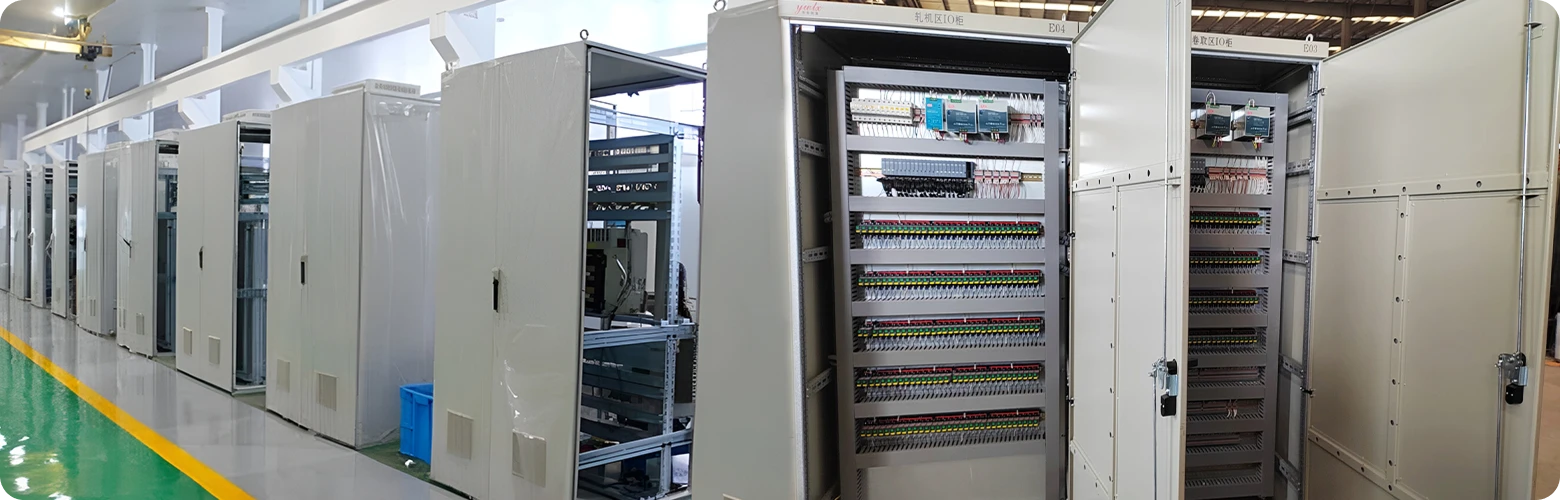
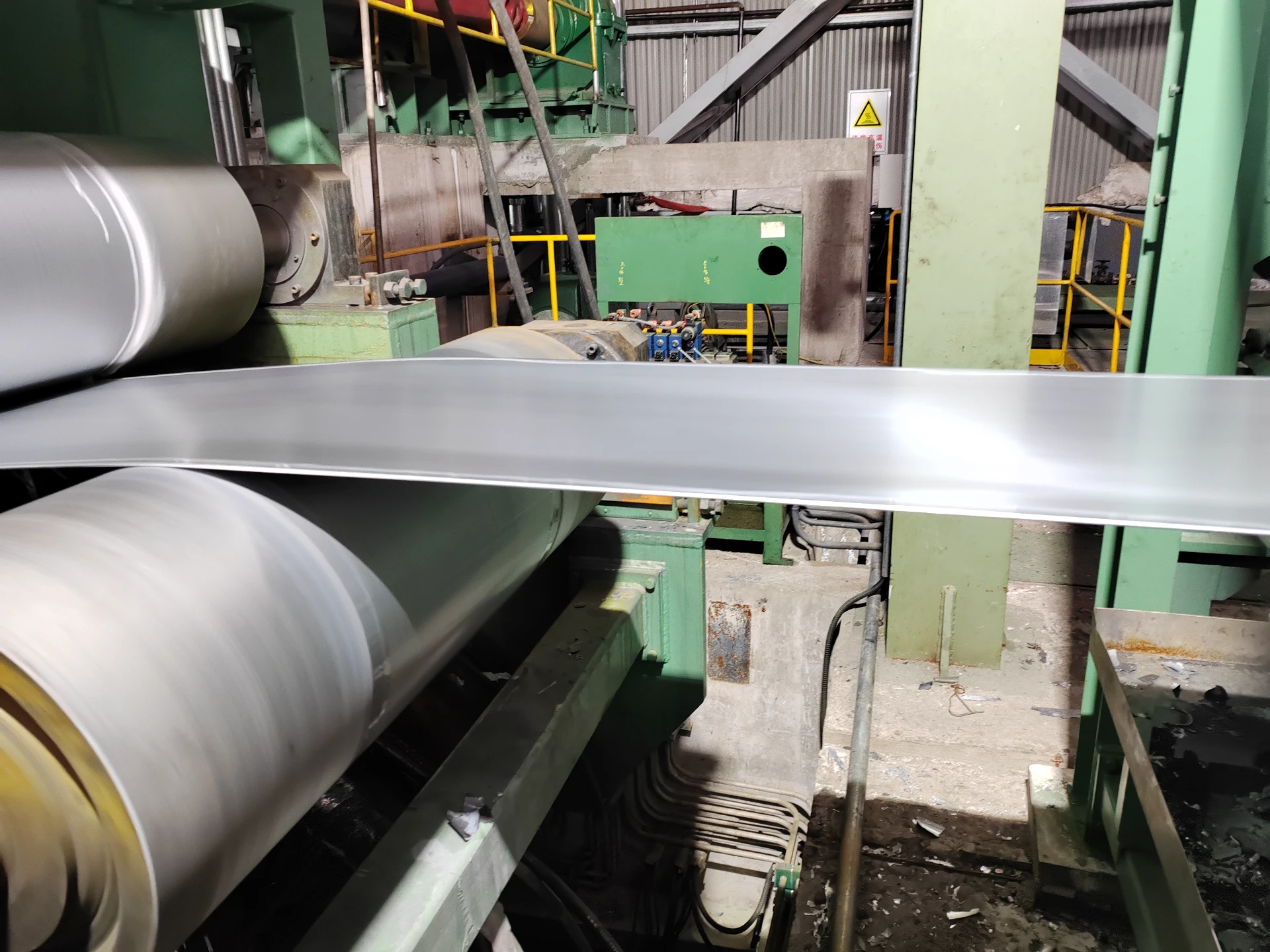

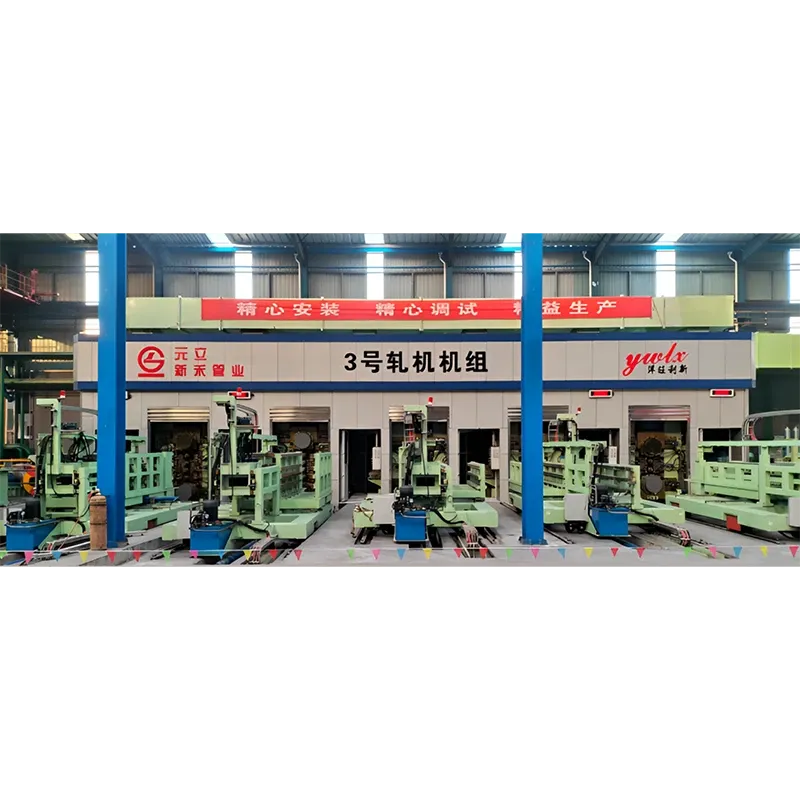
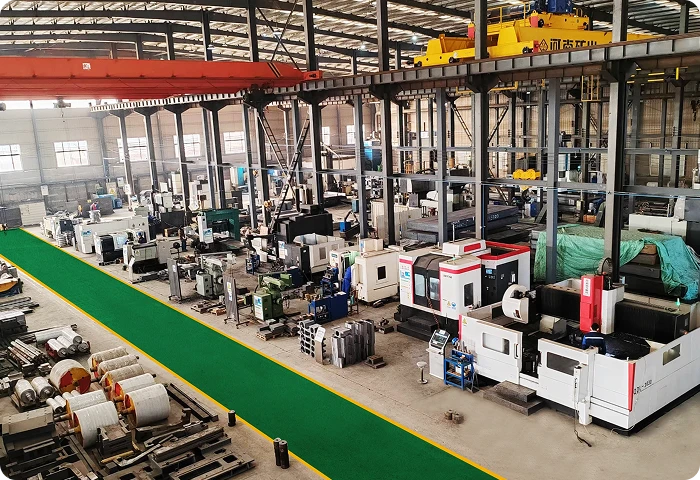
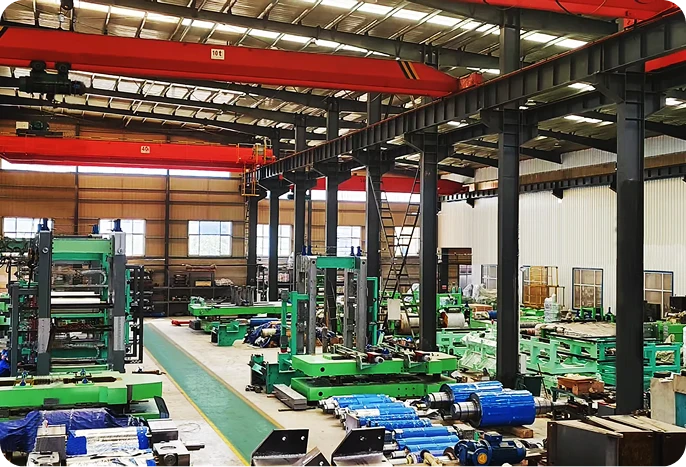
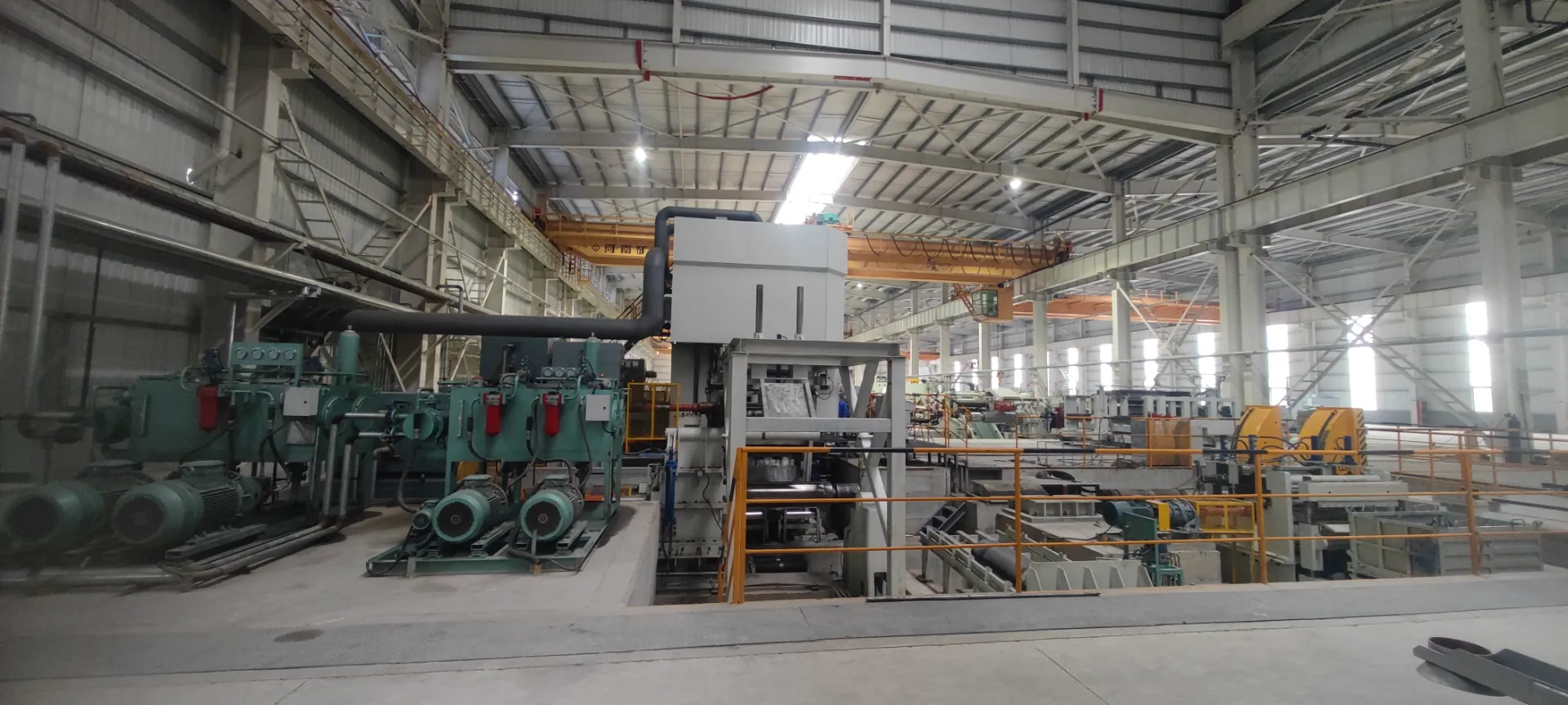
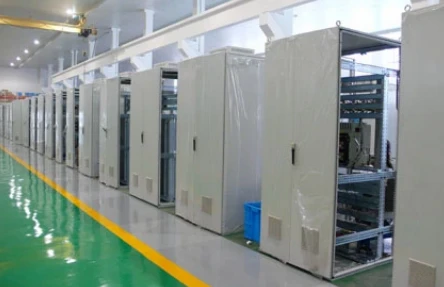
Yang Wang Li Xin operates a state-of-the-art facility over 66,000 square meters,and our manufacturing facility is fully equipped with high-tech machinery and high-capacity cranes. This enables us to handle large work pieces measuring 4.5m in width, 10m in length, and 1.5m in height, guaranteeing our capacity to produce 1800mm skin-pass mills and 1450mm rolling mills. The individual piece can weigh up to 100 tons.


Quality is fundamental to the enterprise survival. We have established a comprehensive and meticulous quality management system and have successfully obtained ISO14000 certification. Starting from the design source, it supervises the entire production cycle, including design, procurement, processing, assembly, in-factory testing, installation, and online commissioning. The workshop is equipped with measuring tools like vernier calipers, spectrometers, hardness testers, and ultrasonic flaw detectors. They are used to check materials and control tolerances to ensure the final equipment meets or exceeds requirements. All products have a unique code, This enables the easy identification and traceability of the equipment components and ensures full control of quality.


-
 Best Practices for Integrating a Tandem Cold Mill into a Continuous Processing LineThe steel industry continuously seeks advancements in production efficiency, product quality, and operational cost reduction. One of the most critical components in achieving these goals is the seamless integration of a tandem cold mill (TCM) into a continuous processing line. This integration involves synchronizing multiple stages, from the pickling line to the final cold-rolled product, ensuring
 -
 Cladding Rolling Mill - YWLX|Efficiency&QualityIn recent years, the demand for cladding plates and strips has surged across industries such as electronics, automotive, chemical, and construction. Traditional methods like hot roll bonding cladding and explosive cladding have faced challenges, including low surface quality, high energy consumption, and costly production. YWLX (Beijing Yang Wang Li Xin Sci&Tech Co.,Ltd.) has pioneered a revolutio
 -
 High-Efficiency Automated Packaging Machine for Streamlined OperationsThe demand for industrial automated packaging machines is accelerating in line with Industry 4.0 and global logistics upgrades. This in-depth guide explores automatic packaging systems , reveals process flows, specs, industry data, and authoritative comparisons — focusing on the Skin Pass Mill solution. Actual application scenarios, data-driven insights, and visualized parameters offer a comprehen


